

The Rule Of Veil
An Iranian lady recently removed her hijab (a head covering worn in public by some Muslim women) to protest against the moral policing and her video went viral across the globe.
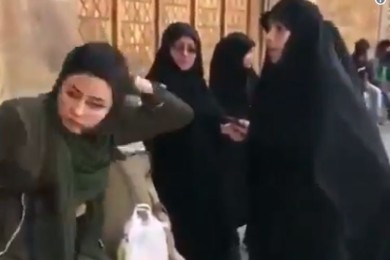
In the video, it’s seen that the young lady, covering her head with a scarf, was sitting at a public place with her friends. Some women, who were present there, advised the young lady to wear the hijab properly and cover her face. Their advice irritated the lady and also prompted her to remove the piece of cloth, making it clear to her advisers that she would not accept moral policing.
Many Iranian women believe that the government has no right to determine their dress code. They had staged protests against the laws regarding hijab earlier this year. The protesters removed their hijabs in public to send a strong message to their government. Once again, the Islamic Republic experienced the same last week. A person captured the event in his camera and posted it on the social media. Within a minute, the video went viral.
In Iran, women are still struggling to enjoy their basic rights. Tara Sepheri is one of them. But, she is lucky. Once, Tara had planned to dress up as a boy. However, her father discouraged the idea and did not allow her to enjoy football – the men’s game – in a stadium. There are so many women, like Tara, in Iran, where women are banned from watching men’s sports (including football, boxing and swimming). In the last 10 years, some women have dressed up as men to enjoy football matches in a stadium. They are sports lovers who love to experience what it means to be sitting amidst thousands of fans and cheering for their team. Jafar Panahi’s award-winning movie ‘Offside’ will help us understand the scenario in Iran.
However, things have changed in recent times and Tara – a researcher with Human Rights Watch – got an opportunity to cheer for the Iranian national team during its first game of the 2018 FIFA World Cup against Morocco. For the Iranian girl, it was an experience that would linger for a lifetime. “Just the feeling of being able to cheer and shout for a team – that’s the most harmless fun you can have, and it’s a privilege and a luxury in Iran. How ridiculous is that? Just the freedom to go shout for the team that you care about,” she told an Indian daily.
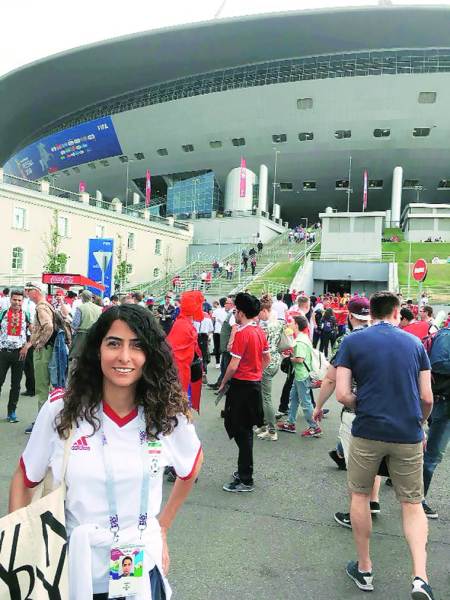
Tara Sepheri in Russia
In a rare first, The Iranian authorities allowed women in Tehran to enter the famous Azadi Stadium on June 20 to watch the Iran versus Spain World Cup match on a big screen. “That’s the closest they are going to get to watch Iran play,” insisted Tara. It is to be noted that neighbouring Saudi Arabia, too, lifted the ban on women going to stadia in January 2018. However, restriction is still there in Iran.
In the West Asian country, women have to keep their heads covered as per the ‘law’. Even foreign nationals have to follow the same rule, irrespective of the purpose of their visit to Iran. Indian chess player Soumya Swaminathan recently protested against this abuse of individual rights. The Indian Grandmaster has withdrawn from the Asian Team Chess Championship – to be held in Hamadan between July 26 and August 4 – because of the Hijab Law, saying: “I understand the organisers expecting us to wear our national team dress or formals or sporting attire for our games during official championships, but surely there is no place for an enforceable religious dress code in sports.” Earlier in 2016, Indian pistol shooter Heena Sidhu had pulled out of the Asian Airgun Shooting Championship in Iran due to the compulsory hijab rule for all women athletes.
If talented sportspersons agree to compromise with their career because of the law, then there should be a valid reason behind it.

Soumya Swaminathan
Each and every nation has its own cultural identity, like clothing, food habits etc. It is unethical to impose domestic laws on foreign nationals. The issue is serious, as well as sensitive. It’s all about interference in individual rights. That’s why a number of people have congratulated the young Iranian lady and the Indian chess player on social media for protesting against the hijab rule. Their message was clear: the state can’t force women to cover their heads with hijab…… it’s their personal choice.
Interestingly, the hijab was optional for Iranian women in the decades before the 1979 Islamic Revolution. Under the Shah, being veiled was often considered as a form of backwardness. As anti-Shah sentiment began to grow in the lead up to the revolution, many female students and middle-class women began to wear the hijab as a form of protest against the ruler and as a nationalist symbol against Western consumerism. After the Revolution, it became compulsory for women to use hijab in Iran and the concerned authorities started considering protest against the hijab rule as a ‘civil disobedience movement’. They called the protesters ‘Girls on Enghelab Street’ (or ‘Girls of Revolution Street‘) and made it clear that women, protesting against wearing the hijab in Iran, would be charged with inciting prostitution (!) and jailed for up to 10 years.
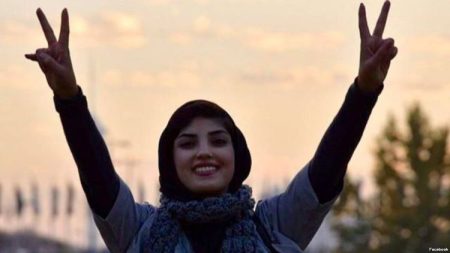
Civil rights activist Shima Babaei
People, who issue the order, don’t have to wear the hijab and this is the practice of a male-dominated society. Of course, this is a wrong practice as the state can’t decide the dress code for women (or for any person). A person should have the right to wear a garment in which s/he feels comfortable. And the ‘unwanted’ interference of any person or persons in that matter should be considered as wrong practice. That is not only undemocratic, but also a crime! We can hope that Tehran will realise this, soon….
Boundless Ocean of Politics on Facebook: https://www.facebook.com/boundlessoceanofpolitics/
Boundless Ocean of Politics on Google Plus:
https://plus.google.com/+KoushikDasboundless
Boundless Ocean of Politics on Twitter:
https://twitter.com/kousdas?s=09
Boundless Ocean of Politics on Linkedin:
https://www.linkedin.com/company/boundless-ocean-of-politics
Contact us: kousdas@gmail.com

 ISMC
ISMC Boundless Ocean Of Politics