

Man, Machine & The Square
A common man – wearing a loose white shirt and holding a bag in his left hand – was seen standing up to a People’s Liberation Army (PLA) tank right in the middle of the wide Chang’an Avenue. There is still no reliable information about fate of the man, as the world doesn’t know whether the armoured car stopped before him or ran him over. One of the most popular symbols of 1989 Tiananmen Square Massacre in Beijing is popularly known as ‘Tankman’.
Later, the world came to know that the Tankman’s real name was Wang Weilin. He was just 19 during the massacre. The iconic footage of Wang was taken on June 4, 1989. No one knows what happened to him after the bloody day. According to some historians, he took shelter in Taiwan. Beijing has always claimed that the Tankman was not killed on that day, as the soldiers came down from the tank and took him away. However, China’s claim fails to convince the global community.
As the world marked the 29th anniversary of the crackdown on the pro-Democracy protesters in Beijing on June 4, the hero of the protest was remembered across the globe through #Tankman2018 campaign. Chinese cartoonist Badiucao said that the Tankman represents “something lost in China’s young generation now – the idealism, passion, sense of responsibility and confidence that an individual can make a change”. He also said: “Tankman is very relevant today and people should see it. Society has not changed much since the massacre for the oppression has never stopped.”
The protests had begun in April 1989 after the death of Hu Yaobang, the ousted General Secretary (1981-87) of the Communist Party of China. Many used to consider Hu as a reformer, as he had the support of students. The students wanted the Chinese government to continue Hu’s pro-market and pro-democracy policies.
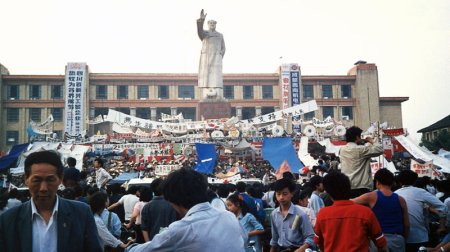
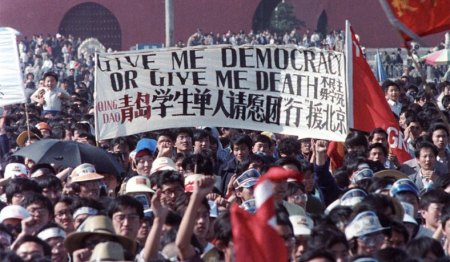
Immediately after Hu’s official state funeral, nearly 100,000 students gathered in Beijing’s Central Square. An anti-protest editorial in ‘People’s Daily’ enraged the students further on April 26. A hunger strike had begun by May 13 and the number of protesters touched 300,000. After considering the intensity of the protests, the concerned authorities in Beijing declared Martial Law on May 20. The PLA marched on Beijing before they were withdrawn a few days later. The Chinese protesters tried hard to convince the soldiers and asked them to join their cause.
Later, the student protest became split, with no clear leader. Still, the students and their supporters were occupying the Central Square and installed a 30ft styrofoam statue – modelled on the Statue of Liberty – there. They also mocked government “bribes” for pro-government marches.
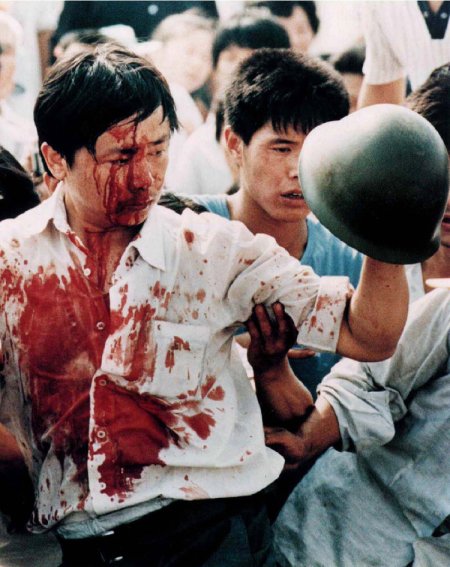
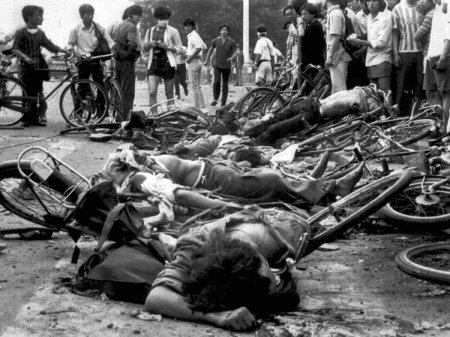
In June, the PLA started clearing the square. However, the protesters resisted the soldiers. Although most of the protesters were unarmed, some of them had rocks and other weapons. Officially, 241 people died after violence erupted in Tiananmen Square. However, the private media reported that more than 10,000 protesters lost their life. Others, ranging into the thousands, had circulated, with none confirmed. Many of the deaths took place outside the square, with soldiers firing directly at unarmed protesters. Tens of thousands of people were detained after the protests and an unknown number were likely executed. People across the Asian country still remember the massacre that was filtered through the country’s state-run television stations.
It is to be noted that Nobel Peace Prize laureate Liu Xiaobo returned to China to support the Tiananmen Square protests and was imprisoned from 1989 to 1991 (and again from 1995-96 and in 1996-99) for his alleged involvement in the democracy and human rights movement. On October 8, 2010, the Nobel Committee awarded Liu the Nobel Peace Prize “for his long and non-violent struggle for fundamental human rights in China”. However, Beijing reacted negatively and censored news about the announcement of the award. Liu died from unspecific illness on July 13, 2017 at First Hospital of China Medical University in Shenyang.
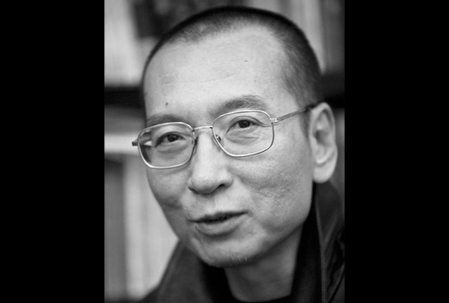
Liu Xiaobo
China is still trying to ignore the legacy of the event, with searches on the popular Chinese micro-blogging site ‘Weibo’ banned on that day this year. Novelist Murong Xuecun recently said that President Xi Jinping might be more paranoid than those who came before him. It’s quite natural that President Xi and his comrades will try to ‘erase’ the pro-democracy protest from history, because people – like Xi, Kim (Jong-un), (Vladimir) Putin and (Donald) Trump – are in the same league. All of them run an ‘authoritarian’ government in order to enjoy ‘absolute’ power.
Undoubtedly, the Chinese president is ‘luckiest’ among them. President Xi, unlike his Russian and American counterparts, has not been criticised by the global community for suppressing his countrymen. Under the veil of Socialism, he has successfully consolidated power and become one of the most powerful world leaders. The Chinese Communist Party’s move to repeal presidential term limits in February helped Xi stay on at least through the next decade. The president was elevated to the same status as Mao Zedong in October after his name was written into the Communist Party charter.
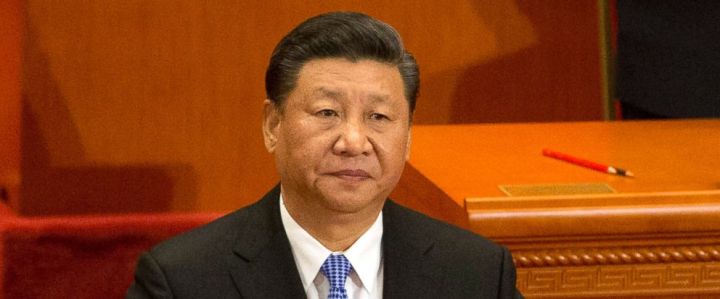
President Xi
Such a ruler will definitely try to scrub the event from collective memory. Perhaps, he will not succeed as the global community will never forget the pro-Democracy protests that had ended in bloodshed.
Boundless Ocean of Politics on Facebook: https://www.facebook.com/boundlessoceanofpolitics/
Boundless Ocean of Politics on Google Plus:
https://plus.google.com/+KoushikDasboundless
Boundless Ocean of Politics on Twitter:
https://twitter.com/kousdas?s=09
Boundless Ocean of Politics on Linkedin:
https://www.linkedin.com/company/boundless-ocean-of-politics
Contact us: kousdas@gmail.com

 ISMC
ISMC
