

Can Inequitable Distribution Of Wealth Be Termed As Very Dangerous?
When the Prime Minister Narendra Modi was addressing the opening session of the World Economic Forum’s annual meet on behalf of India (now recognised as one of the fastest-growing economies in the world) in the popular Swiss ski resort of Davos on January 23, we came to know that an unequal distribution of wealth continues to grow in the South Asian nation.
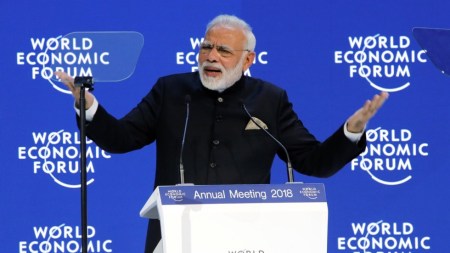
After so many years, an Indian prime minister addressed the World Economic Forum. For the first time perhaps – the top leadership of the Forum and representatives of the world’s leading economies gave so much importance to this address made by the PM. PM Modi pitched India as a new pole in the globalised world, saying: “The youth in India is capable of building a USD 5 trillion economy by 2025.” He told the audience: “Come to India if you want wealth and wellness. Come to India if you want health and wholeness. Come to India if you want prosperity with peace… You will always be welcome.”
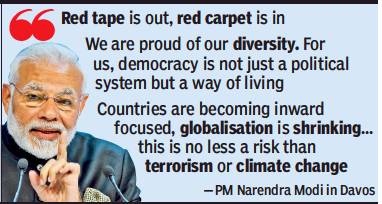
At the same time, the PM strongly criticised the US’ rising protectionism and regression on climate change under President Trump and China’s decision to defend terrorists promoted by Pakistan, stressing: “Many societies and countries are becoming self-centred. It seems that globalisation, as opposed to its definition, is shrinking. Such misplaced preferences can’t be considered any lesser threat than terrorism or climate change. We must admit the shine of globalisation is fading.”
The PM’s attempt to project India as a new ‘power’ in global geopolitics is undoubtedly a matter of pride for every Indian. However, Oxfam didn’t allow Indians to enjoy PM Modi’s ‘Davos moments’. In its latest report – titled ‘Reward Work, Not Wealth’, the international confederation of charitable organisations focussing on the alleviation of global poverty said that the income inequality was getting worse in India, where the top 1% bagged 73% of the country’s wealth. In recent times, the Indian economy has been progressing towards prosperity. But, majority of the people failed to enjoy benefits of the economic prosperity.
The PM had assured people that he would always be with them. He had also promised that he would make everyone a partner of the development, saying that his government’s mantra would be ‘Sabka Saath Sabka Vikas’ (or ‘Collective Efforts, Inclusive Growth’). However, the Oxfam report tells a completely different story. As per the report, India’s richest 1% held 58% of the country’s total wealth in 2017, which was higher than the global figure of about 50%. Oxfam India CEO Nisha Agrawal has expressed serious concern over the scenario, stressing: “The billionaire boom is not a sign of a thriving economy, but a symptom of a failing economic system. Those working hard, growing food for the country, building infrastructure, working in factories are struggling to fund education of their children, buy medicines for family members and manage two square meals a day. The growing divide undermines democracy and promotes corruption and cronyism.”
India is no stranger to income inequality. However, the gap is widening further and PM Modi should be aware of this. Otherwise, the growing income inequality will destroy the base, as well as the structure of the Indian economy. The rulers should know that it is dangerous, if the people lose confidence in the State.
Boundless Ocean of Politics on Facebook: https://www.facebook.com/boundlessoceanofpolitics/
Boundless Ocean of Politics on Google Plus:
https://plus.google.com/+KoushikDasboundless
Boundless Ocean of Politics on Twitter:
https://twitter.com/kousdas?s=09
Contact us: kousdas@gmail.com

 ISMC
ISMC Boundless Ocean Of Politics