

In Persia, Yet Again
Tehran and other Iranian cities have been witnessing anti-government protests by the people for the last seven days. It seems that after a long time, the West Asian nation has been facing quite a disquiet, rather ‘a political crisis’. And as usual, countries may have conjured up their plans to take diplomatic advantages of the opportunity in order to put Iran in a back foot.
Sworn enemies of Iran (to be read as the US and Saudi Arabia) have slammed the Hassan Rouhani administration for being responsible in creating such a situation, as thousands of people – including women – have been seen joining in the protests, many of who have removed their hijabs (rousari) during the protest march. The Iranians have been shouting slogans against religious leaders and non-elected religious representatives in the administration. It seems that a movement towards progress has been initiated in the country against excessively oppressive state and religious leadership. In a rare first, these Iranians have brought direct allegations against Supreme Leader Ayatollah Ali Khamenei.
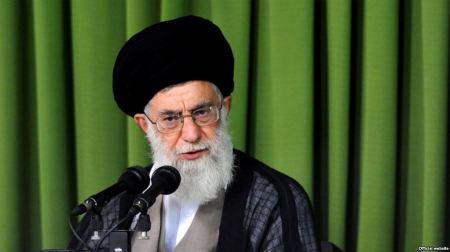
Ayatollah Ali Khamenei
The way Saudi Arabia and the US have reacted to the incidents taking place in Iran, it seems that their reactions are not so simple or natural. In fact, President Donald Trump congratulated the protesters in Iran. Perhaps, it would be a mistake if we consider the protests as a fight between the progressive people and an anarchist ruler. It’s not that! Basically, the current political turmoil in Iran may be termed as a part of a complex international geopolitical scenario.
Earlier this week, Saudi Arabia possibly advised President Rouhani to resign, stating that he failed to tackle the situation. It is to be noted that after an unsuccessful ballistic missile attack by the Houthi rebels aimed at the Saudi king’s official residence in Riyadh in December 2017, Saudi Arabia claimed that the missiles were being supplied by Iran. The missile was fired from Yemen, where (according to Riyadh) the anti-government elements are waging a war against the Saudi-backed government with the help of Iran. So, a section of political experts is of the opinion that the present crisis in Iran is an outcome of the power struggle between Tehran and Riyadh in West Asia.
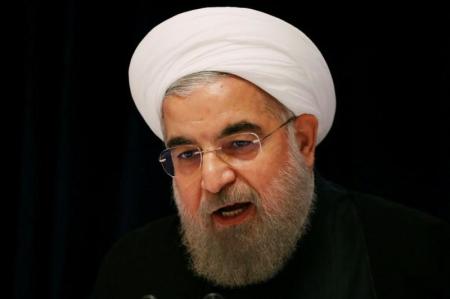
Hassan Rouhani
Surprisingly, any political crisis in any West Asian nation has a relation with a neighbouring country. But, President Trump surprised everyone this time. In the past, US presidents did not comment much on the domestic issues of Iran. President Trump, who called Iran “a terrorist nation like few others” in October 2017, has broken the tradition. By describing Iran as a terrorist nation, he had basically expressed distrust in the Iranian people. And now, he is seen backing the Iranian protesters.
So, Iran may justly claim that the top political leadership in Tehran will resolve the crisis and it will be better for other countries not to interfere in its ‘internal’ matters. Such interference is not only ‘unethical’, but also very dangerous as it could make a local or regional crisis a ‘big and global’ one.
Boundless Ocean of Politics on Facebook: https://www.facebook.com/boundlessoceanofpolitics/
Boundless Ocean of Politics on Google Plus:
https://plus.google.com/+KoushikDasboundless
Boundless Ocean of Politics on Twitter:
https://twitter.com/kousdas?s=09
Contact us: kousdas@gmail.com

 ISMC
ISMC Boundless Ocean Of Politics