

The Cohabitation Of Patriarchy With Consumerism
Hugh Hefner died on September 27, 2017 at the age of 91. He served as the editor-in-chief of ‘Playboy’ until the last day of his life, although the magazine passed away a few years ago. Playboy is still published every month, but its existence is meaningless in the modern world as sex movies are easily available on Internet nowadays.
Hefner, who became a legend in his lifetime, was beyond that subversion. The American businessman, wearing a silk trouser, used to control his empire from the huge bed of Playboy Mansion. Once, he revealed that he had more than 1,000 bed partners. Hefner not only enjoyed his public life as much as possible, but also successfully managed to hide his personal life. Of course, Hefner can claim that he has created the concept of ‘successful urban man’.

Hugh Hefner
Hefner published the first edition of Playboy in 1953. America was going through a transition period at that time. Twenty years ago, then President Franklin D Roosevelt enacted the ‘New Deal’ – a series of federal programmes, public work projects, and financial reforms and regulations – in response to the Great Depression. These reform programmes included support for the farmers, the unemployed, the youth and the elderly, as well as the new constraints and safeguards on the banking industry and changes to the monetary system. Majority of the Americans considered the ‘New Deal’ as ‘Superman’, which could resolve all the problems. In fact, the initiative helped the US emerge as a super power in world politics after the WWII. Playboy was born in that America, which became the heaven of consumerism.
Playboy was born in ‘post-uncertainty’ or ‘prosperity’ period and the philosophy (of that period) was: money can buy everything and anyone can earn the money. It was the ‘American Dream’.
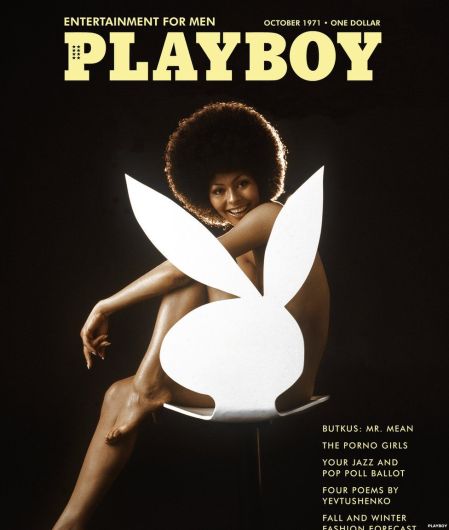
Freedom was the essence of contemporary American society in post-WWII period. And Americans were eager to enjoy the freedom of purchasing luxury goods, freedom of enjoying a ‘free’ sexual life and also freedom from family ties. Hefner was against the concept of marriage. He was of the opinion that there was no need to get married, as some dollars could help you get attractive partners every night. The situation in America in the 1950 was indeed revolutionary. Before the WWII, the American society used to follow the Victorian ethics. The society was conservative in nature and discussions on sexual freedom were strictly prohibited.
Hefner published his ideas of ‘Playboy philosophy’ in first few editions of the magazine. The essence of his philosophy was ‘freedom’ – the freedom of market, the freedom of buyers, the freedom of sex. The Playboy philosophy strongly criticised apartheid and supported homosexuality. It was against the control of the church over the state. The liberal ideas of 1960s encouraged Hefner to pen the Playboy philosophy. He stressed on the demands or needs of the people, saying that we should not judge those demands ethically as they are above the state, society and social control. Hefner also said that the validity and legitimacy of those demands depend on people. If people can afford them and buy all of them, then no one should oppose the demands. Interestingly, Hefner managed to include sexuality in the products’ and services’ list. The sexual revolution he dreamed about was a part of consumerism. He told the world the story of gaining the ability to ‘buy sex according to your choice’.

Kate Millett
Surprisingly, Kate Millett passed away on September 6 (just three weeks before Hefner’s death). Millett – the American feminist writer, educator, artist and activist – was another proponent of sexual revolution. Hefner and Millett were two completely different persons. Millett, the main face of the second wave of feminist movement, (too) used to believe that it was important to break the family structure for the sake of sexual revolution. Apparently, there was no difference between the two. But, their aims were different. Millett wanted to break the family structure in order to allow women to enjoy their sexual freedom in a patriarchal society. On the contrary, Hefner wanted to ‘rescue’ men from all the social liabilities. For him, only men have the right to enjoy sexual freedom. Hefner clarified that not all the men have this right. Those, who have achieved such power and prosperity, could enjoy it. So, Hefner’s sexual revolution has a cordial relation with the patriarchal society. In his philosophy, the concepts of open market, consumerism and patriarchy co-exist peacefully.
Feminists launched attacks on Hefner and his Playboy in the 1960s and 70s. However, Hefner won the battle. His magazine is dead, but his vision or philosophy is still alive. The ‘modern’ civil society has accepted his idea that sexuality is a product and men can purchase it, if they earn enough money. However, the civil society has made some changes in Hefner’s philosophy. Hefner’s jihad was against America’s infinite adolescent period. He used to say that America should become an adult. He used to believe that the adulthood would come through sexuality. Although America achieved sexual freedom, it failed to achieve adulthood. In fact, Hefner did not allow his country to achieve adulthood in an attempt to popularise his idea of sexual freedom. If sexual freedom becomes adolescents’ fantasy, then the society treats women as ‘consumer products’. As a result, women are not allowed to demand or enjoy their ‘freedom’.

Hugh Hefner
Consumerism has accepted Hefner’s idea of sexual freedom. As per the norms of the marketing world, men could not be termed ‘successful’ without beautiful women beside them. In the 1980s, the advertising world portrayed men’s success by showing women, with scantily dressed, as the property of men. The message was simple: men have the purchasing power, so it’s important for the advertisers to influence their choices. Page Three, too, discovered the concept of ‘Trophy Wife’ – the status symbol of a successful man is his beautiful wife.
Lying on the huge bed inside his Playboy Mansion, Hefner might have laughed silently. He knew that he won the war that he had declared against the ‘Women Liber’ (feminists were known as Women Liber in the 1970s). He also knew that men, across the globe, want to become ‘Hugh Hefner’ – the lord of beautiful women.
Hefner was the man to whom ‘consumerism’ and ‘patriarchy’ were bed-fellows, it may well be conjectured!
Boundless Ocean of Politics on Facebook: https://www.facebook.com/boundlessoceanofpolitics/
Boundless Ocean of Politics on Google Plus:
https://plus.google.com/+KoushikDasboundless
Boundless Ocean of Politics on Twitter:
https://twitter.com/kousdas?s=09
Contact us: kousdas@gmail.com

 ISMC
ISMC Boundless Ocean Of Politics