

India, Japan: The ‘Strategic’ Friends
With China in mind, India and Japan have decided to further intensify strategic ties.
On Thursday, Indian Prime Minister Narendra Modi and his Japanese counterpart Shinzo Abe discussed various ways to strengthen ties in different sectors, such as trade, security and civil nuclear energy. According to sources close to the Prime Minister’s Office, they also decided to strengthen co-operation in the Indo-Pacific region to counter China’s growing influence.
In a rare first, India got Japan to name Lashkar-e-Toiba (LeT) and Jaish-e-Mohammed (JeM) in the joint statement issued after the Modi-Abe meeting. It follows the recent BRICS Declaration that names the same Pakistan-based groups while expressing concern over terrorism. In a reference to Pakistan and China, the two PMs stressed the importance of holding accountable all parties that have backed the North Korean nuclear programme.
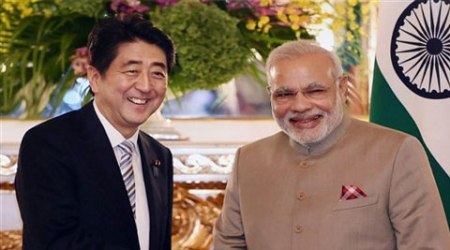
Later, senior officials of the two “friendly” nations signed 15 agreements in the presence of the two premiers in western Indian city of Gandhinagar. Speaking at a joint press conference with PM Abe, Modi said that Indo-Japan ties were not limited to bilateral or regional spheres, as New Delhi and Tokyo were closely co-operating on key global issues.
As far as the bilateral civil nuclear pact is concerned, Modi expressed hope that it would open a new chapter in co-operation between the two in the clean energy sector. He told the press: “We had signed a historical pact for peaceful use of nuclear energy during my visit to Japan last year. I am whole-heartedly thanking Japan’s Parliament, its people and particularly Prime Minister Abe for its ratification.”
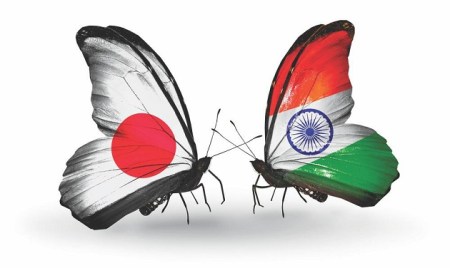
It is to be noted that India is the first non-NPT (Non-Proliferation of Nuclear Weapons) signatory with which Japan signed the accord. The deal allows the Asia Pacific nation to export nuclear technology to India.
Meanwhile, the Japanese premier declared that the friendship between India and Japan would promote peace not only in Asia, but also in other parts of the world. “We have just signed a joint statement which will serve as a milestone to open a new era for Japan-India relationship… based on that, we will strongly promote Japan-India special strategic and global partnership to drive peace and prosperity for Indo-Pacific region and the whole world,” he stressed.
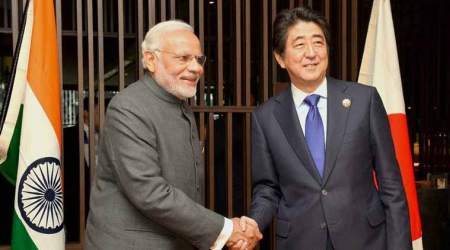
Prime Minister Abe, who arrived in India on September 13 for a three-day visit mainly to attend the annual summit between the two countries, told the Indian media that PM Modi informed him about various reform initiatives, including in the areas of taxation, taken by the Indian government to promote economic growth. He said that the Indian PM also asked Japanese companies to take advantage of ease of doing business in the South Asian country. In 2016-17 financial year, Japan invested USD 4.7 billion in India and the amount is 80% higher compared to the previous fiscal year.
Talking to the media in Gandhinagar, Indian Foreign Secretary Dr Subrahmanyam Jaishankar said that Prime Minister Abe’s India visit saw the launch of Asia-Africa Growth Corridor (AAGC), adding that the initiative would provide an alternative to China’s ‘One Belt One Road’ (OBOR) initiative. He explained that AAGC is basically a development co-operation initiative envisaged to link the two continents. It further entails development and co-operation projects, quality infrastructure and institutional connectivity, apart from enhancing capacities and skills, and people-to-people partnerships, insisted Dr Jaishankar.
Boundless Ocean of Politics on Facebook: https://www.facebook.com/boundlessoceanofpolitics/
Boundless Ocean of Politics on Google Plus:
https://plus.google.com/+KoushikDasboundless
Boundless Ocean of Politics on Twitter:
https://twitter.com/kousdas?s=09
Contact us: kousdas@gmail.com

 ISMC
ISMC Boundless Ocean Of Politics