

The Role Of A Neighbour
Asia is facing an amazingly complex crisis. Last week, many people in the Indian subcontinent were looking at Indian Prime Minister Narendra Modi as they thought that he could resolve the crisis during his recent visit to Myanmar.
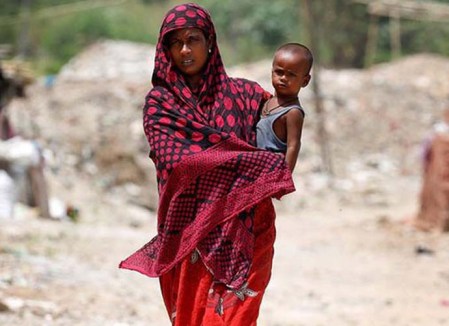
The whole world is well aware of the current political scenario in Myanmar, where the government forces are torturing the Rohingya Muslims. In the last few months, the situation has deteriorated in the South-east Asian country, with thousands of Rohingyas leaving their homeland and taking shelter in neighbouring India and Bangladesh. Their images, published by the media, have shocked the global community. However, the situation remains same in Myanmar.
Recognition of refugees, who take shelter in foreign countries after crossing the international border, has long been a controversial issue not only in Asia, but also in other parts of the world. India and Bangladesh have expressed serious concern over the arrival of Rohingyas in their territory mainly because they are Muslims. The two countries have also decided to send Rohingya refugees back to Myanmar as soon as possible.
The Indian premier arrived in Myanmar at a time when the status of Rohingya Muslims as Myanmarese citizens was at stake. Prime Minister Modi had no plan to visit Myanmar. However, the Rohingya crisis prompted him to make a stop in Naypyidaw while returning to India from China after attending the BRICS Summit. When he reached Myanmar, people across the subcontinent expressed hope that he might resolve the crisis through negotiation.
Surprisingly, the visiting Indian PM didn’t mention the alleged persecution of the minority Rohingya Muslim community during his meeting with the top Myanmarese leadership. He only expressed concern over “extremist violence” in Rakhine province. “We hope that all stakeholders together can find a way out in which unity and territorial integrity of Myanmar is respected,” Modi said in a joint statement with State Counsellor and Nobel Peace laureate Aung San Suu Kyi in Naypyidaw.

Later, Indian Foreign Secretary Dr Subrahmanyam Jaishankar told the media: “We discussed committing Indian assistance to the Rakhine state development programme because we really believe that the medium-term way of addressing problems in the Rakhine area is really to look at development aspects.”
Prime Minister Modi can easily argue that why India will take the liability of Myanmar’s internal crisis. Interestingly, the answer is there in the UN policies for refugees. Article 33 of the 1951 Convention relating to the Status of Refugees or its 1967 Protocol clearly states: “Non-refoulement is a fundamental principle of international law which forbids a country receiving asylum seekers from returning them to a country in which they would be in likely danger of persecution based on race, religion, nationality, membership of a particular social group or political opinion.”
Even, it is possible to find the answer to this ‘why’ in the Indian history. Migration into India from other countries is not a new problem. In the past, India had allowed Tamil people, who left Sri Lanka during the war between government forces and the LTTE, to stay in the country. India did the same during the Bangladesh Liberation War in 1971. At that time, thousands of refugees from erstwhile East Pakistan (now Bangladesh) took shelter in India. India had selectively allowed entry to refugees, such as Tamils from Sri Lanka, Tibetans from Tibet and China, and Hindus from Pakistan and Bangladesh.
India had made various permanent or temporary arrangements for people of the neighbouring countries in the past. So, it is not (technically) impossible for New Delhi to build some temporary camps for the helpless Rohingya people.
However, the current geopolitical landscape in Asia has influenced India’s decision this time. For India, it becomes important to bolster ties with Myanmar in an attempt to counter China’s growing influence in the region. Apart from Malaysia and Indonesia, not a single country in South and South-east Asia has criticised Myanmar over the Rohingya issue.
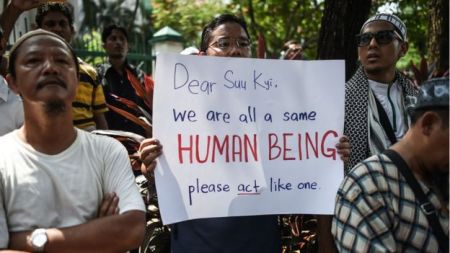
It is unfortunate that the continued persecution has forced Rohingyas to become one of the largest internally displaced communities across the world. Humanity must take precedence over religious biases in dealing with Rohingya refugees.
Boundless Ocean of Politics on Facebook: https://www.facebook.com/boundlessoceanofpolitics/
Boundless Ocean of Politics on Google Plus:
https://plus.google.com/+KoushikDasboundless
Boundless Ocean of Politics on Twitter:
https://twitter.com/kousdas?s=09
Contact us: kousdas@gmail.com

 ISMC
ISMC Boundless Ocean Of Politics