

The Intense Pleasure Of Power
The Hurst and Blackett edition (in English) of Adolf Hitler’s world-famous autobiography ‘Mein Kampf’ was published in 1939. And on March 21, 1940, famous writer George Orwell wrote a review of this book in ‘New English Weekly’. The author of ‘Animal Farm’ discussed some interesting points in that review.
Orwell wrote: “For at that date Hitler was still respectable. He had crushed the German labour movement, and for that the property-owning classes were willing to forgive him almost anything. Both Left and Right concurred in the very shallow notion that National Socialism was merely a version of Conservatism.”
Suddenly, Hitler changed his policies. Orwell continued: “Suppose that Hitler’s programme could be put into effect. What he envisages, a hundred years hence, is a continuous state of 250 million Germans with plenty of ‘living room’, a horrible brainless empire in which, essentially, nothing ever happens except the training of young men for war and the endless breeding of fresh cannon-fodder.”
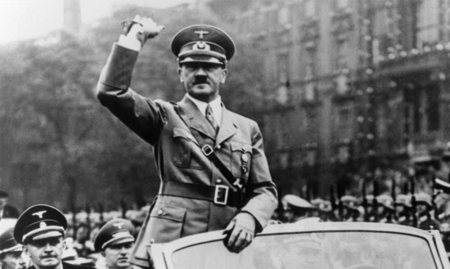
Orwell further said: “I recommend especially the photograph at the beginning of Hurst and Blackett’s edition, which shows Hitler in his early ‘Brown shirt’ days. It is a pathetic, dog-like face, the face of a man suffering under intolerable wrongs. In a rather more manly way, it reproduces the expression of innumerable pictures of Christ crucified, and there is little doubt that that is how Hitler sees himself. The initial, personal cause of his grievance against the universe can only be guessed at; but at any rate the grievance is here. He is the martyr, the victim, Prometheus chained to the rock, the self-sacrificing hero who fights single-handed against impossible odds.”
Then, Orwell wrote the famous sentence: “If he were killing a mouse he would know how to make it seem like a dragon.” He added: “Hitler, because in his own joyless mind, he feels it with exceptional strength, knows that human beings don’t only want comfort, safety, short working-hours, hygiene, birth-control and, in general, common sense; they also, at least intermittently, want struggle and self-sacrifice, not to mention drums, flags and loyalty-parades. Hitler has said to them ‘I offer you struggle, danger and death’, and as a result a whole nation flings itself at his feet. Perhaps later on, they will get sick of it and change their minds, as at the end of the last war. After a few years of slaughter and starvation ‘Greatest happiness of the greatest number’ is a good slogan, but at this moment ‘Better an end with horror than a horror without end’ is a winner.”
Dear readers, are you able to relate Orwell’s interpretation with contemporary Indian politics? Banknote demonetisation, surgical strike, Goods & Services Tax… The Indian government’s message is very clear: face trouble and allow the state to create a ‘new’ India.
After talking about Hitler, Orwell mentioned Stalin’s activities in erstwhile Soviet Union in his article. He wrote: “Fascism and Nazism are psychologically far sounder than any hedonistic conception of life. The same is probably true of Stalin’s militarised version of Socialism. All three of the great dictatorial systems have enhanced their power by imposing intolerable burdens on their peoples. Whereas Socialism, and even capitalism in a more grudging way, has said to people ‘I offer you a good time.’”
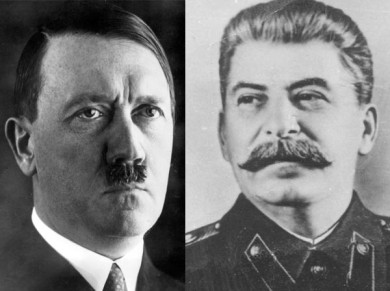
Philosopher Bertrand Russell, too, analysed Stalin’s political character in his book ‘Nightmares of Eminent Persons and Other Stories’ (1954). In this publication, Russell recorded imaginary nightmares of some famous people, including Stalin. Stalin died in 1953 and the book was written one year after his death. It means Stalin did not have the opportunity to read the book.
Russell beautifully portrayed an imaginary background, saying: “The Third World War had been fought and lost. He was a captive in the hands of the Western Allies.” The Russian dictator (now in captivity) enjoyed a glass of vodka and then fell asleep on his chair. He saw (in his dream or nightmare) that he is a prisoner in a small village and has nothing with him, but a Bible. The author made an attempt to change Stalin’s thought process with the help of spirituality.
Russell continued: “Suddenly, Stalin had burst out at his dear ones. ‘What do you gentleman know of the joys of life?’ he had stormed. ‘How little you understand of the intoxicating delight of dominating a whole nation by terror, knowing that almost all desire your death and that none can compass it, knowing that your enemies throughout the world are engaged in futile attempts to guess your secret thoughts, knowing that your power will survive the extermination not only of your enemies but of your friends. No, gentlemen, the way of life you offer does not attract me. Go back to your pettifogging pursuit of profit gilded with a pretence of piety, but leave me to my more heroic way of life.’” Certainly, there is a political epigram in Russell’s book.
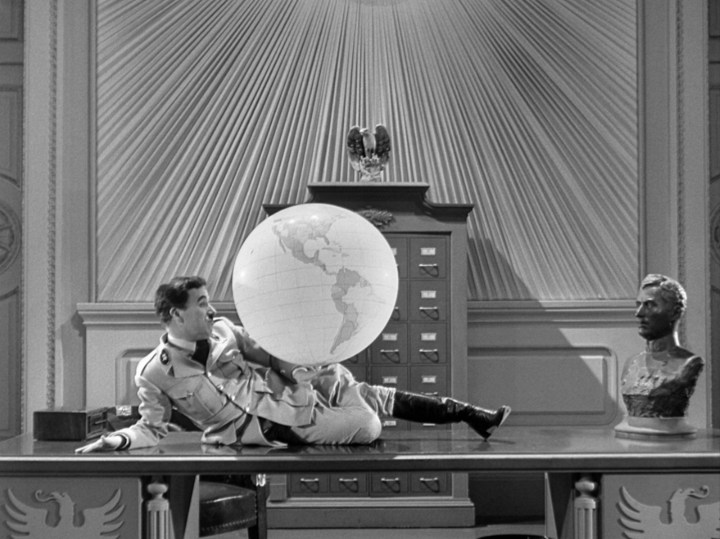
All these are the grammar of dictatorship. In today’s ‘post-truth’ era, dictatorship still exists under the veil of democracy. A documentary film was made (officially) in Germany to showcase Hitler’s greatness. This film teaches us how to encourage propaganda. And there are millions of ‘Joseph Goebbel’s in the modern world. It is called ‘the rise of misinformation industry’. Right now, we are witnessing the victory of ‘post-truth’ across the globe.
Boundless Ocean of Politics on Facebook: https://www.facebook.com/boundlessoceanofpolitics/
Boundless Ocean of Politics on Google Plus:
https://plus.google.com/+KoushikDasboundless
Boundless Ocean of Politics on Twitter:
https://twitter.com/kousdas?s=09
Contact us: kousdas@gmail.com

 ISMC
ISMC Boundless Ocean Of Politics