

India To Remember The Historic Verdict
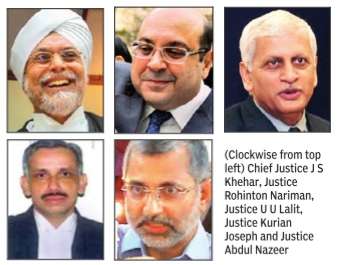
It would be wrong to think that India started a new journey on August 22. The South Asian country introduced ‘widow marriage’ and banned customs, like self-immolation of (Hindu) widows and child marriage, many years ago. The journey reached a new milestone on Tuesday when the Supreme Court (SC) set aside centuries-old practice of ‘triple talaq’ in a landmark 3-2 verdict, in which the majority of the five-member SC Bench agreed that the practice was “un-Islamic” and “arbitrary”.
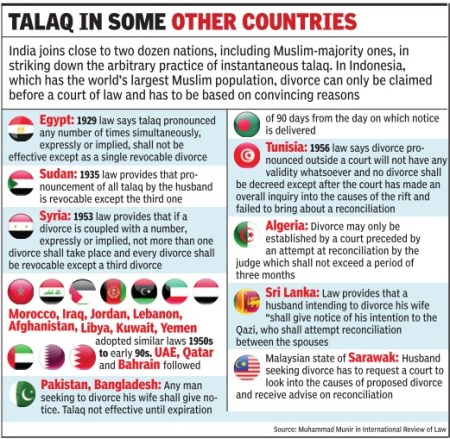
In this country, thousands of women were forced to live a disrespectful, unequal and unsafe married life for so many years in the name of religion. Muslim-majority countries, like Pakistan, Bangladesh, Malaysia, Iraq, Iran, Turkey and Egypt, had declared ‘triple talaq’ illegal long ago. However, ‘secular’ India failed to take such a step before August 22. The Indian policymakers took time to make a final decision in this regard because they had to consider the possible outcomes of the move. Also, policymakers had to deal with some major issues, like whether it would be appropriate to abolish the practice of ‘triple talaq’, whether it would have any adverse effect on the Muslim population etc., in recent past. As a result, Muslim women did not get the opportunity to enjoy fundamental rights.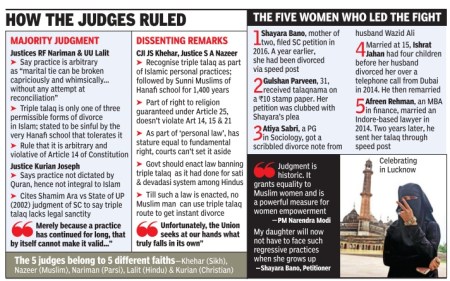
Finally, the SC helped Muslim women in India enjoy ‘freedom’ in the 71st year of Indian independence. Indeed, it was a historic verdict. That’s why India will always remember the judgement which ensures women’s equality.
Interestingly, Quran, at no place, talks about instant ‘triple talaq’. It was a brutal exploitation of Muslim women by the patriarchal society. Quran, at many places, discards instant talaq from the very base. For reference, we can check the Ayat no.4.34_4.128, Ayat no. 2.226_227, Ayat no.4.35, 65.2,2.231 and Ayat no.65.6.
Many consider the verdict, delivered by the highest court in India, from a different perspective. According to that perspective, it is not a victory only for the five women, who started a legal battle against the ‘triple talaq’, or for common Muslim women, but also for women, who wanted to win their rights through legal battles. It was another long legal battle that brought a new dawn for a large number of Indian women. This time, the judiciary has helped India reach a historic milestone.
Boundless Ocean of Politics on Facebook: https://www.facebook.com/boundlessoceanofpolitics/
Boundless Ocean of Politics on Google Plus:
https://plus.google.com/+KoushikDasboundless
Boundless Ocean of Politics on Twitter:
https://twitter.com/kousdas?s=09
Contact us: kousdas@gmail.com

 ISMC
ISMC Boundless Ocean Of Politics